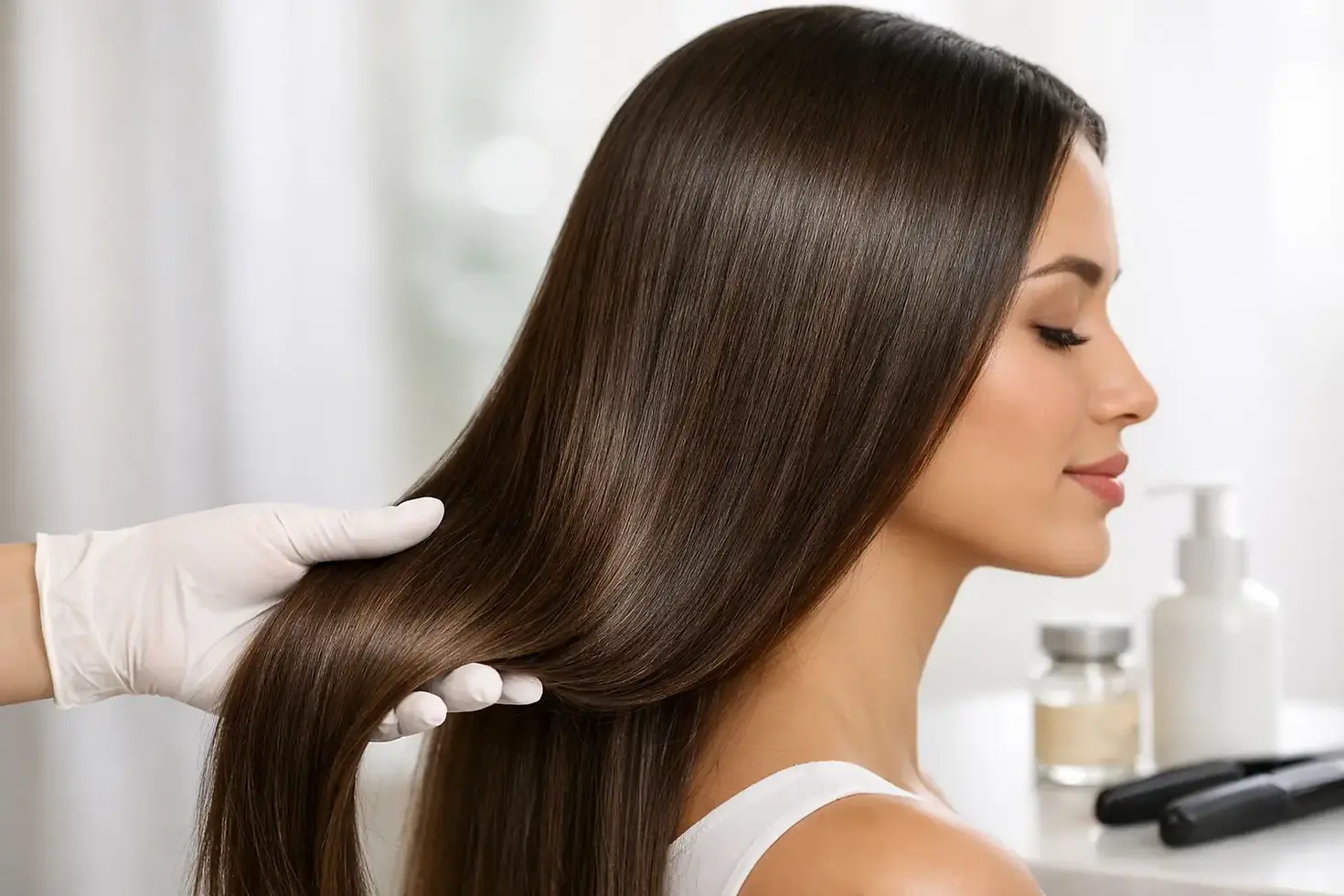
A Guide to Choosing Hair Botox

Frizz that comes back the moment the weather turns, dry lengths that look dull by day two, ends that feel rough no matter what mask you use - that is usually when people start looking for a guide to choosing hair botox. The problem is that the name sounds more dramatic than the treatment often is, and salons do not always describe it in the same way. If you are booking one, the smartest move is to look past the label and focus on what the treatment is actually designed to do for your hair.
What hair botox actually means
Hair botox is not the same as injectable Botox, and it does not freeze anything. In salon terms, it usually refers to a deep conditioning and smoothing treatment intended to improve softness, shine and manageability. Most formulas are built around ingredients such as proteins, amino acids, oils, vitamins and conditioning agents that coat or fill weakened areas of the hair fibre.
That matters because two treatments can both be called hair botox and still behave quite differently. One may lean more towards repair and hydration, while another may give a sleeker, flatter finish that feels closer to a smoothing service. If you book by name alone, you risk ending up with a result that does not match your hair goals.
Guide to choosing hair botox for your hair type
The best place to start is not the product - it is your hair in its current condition. Fine hair, thick hair, curly hair, bleached hair and heat-damaged hair all respond differently.
If your hair is fine or naturally lacks volume, be careful with treatments that promise intense smoothing. They can leave hair looking polished, but they may also make it feel heavier or flatter than you want. In that case, ask for a formula that focuses on repair, softness and frizz control without chasing a pin-straight finish.
If your hair is thick, coarse or very frizzy, you may prefer a richer treatment with stronger smoothing benefits. The trade-off is that more smoothing often means less natural texture. That is not a bad thing if your goal is easier styling, but it is worth being honest about whether you still want body and movement.
For curly or wavy hair, the key question is whether you want to keep your pattern or loosen it. Some hair botox treatments simply soften and reduce puffiness, while others relax the hair enough to alter how curls sit. If preserving your curl shape matters, say so clearly before anything is applied.
If your hair is coloured, highlighted or bleached, prioritise moisture and bond-friendly repair over aggressive smoothing. Damaged hair can look brilliant straight after almost any rich treatment, but the real test is how it feels after a few washes. A good salon should talk you through realistic longevity, not just the day-one finish.
How to read the promise behind the treatment
A lot of disappointment comes from vague wording. "Anti-frizz", "repair", "shine boost" and "smoother hair" can all mean different things depending on the formula and the stylist's method.
Ask what the treatment is meant to improve first. Is it dryness, breakage, lack of shine, unruly texture or styling time? A proper recommendation should match the main issue rather than trying to make one treatment sound like the answer to everything.
It also helps to ask how visible the result will be on your hair type. Someone with porous, bleached hair may see a big difference in softness and gloss. Someone with healthy, straight hair may notice only a subtle upgrade. Neither result is wrong, but the value depends on your starting point.
What to ask before you book
A good guide to choosing hair botox should make booking easier, not more confusing. The simplest way to protect yourself is to ask direct questions.
Start with the formula. Ask whether it contains formaldehyde-releasing ingredients or if it is strictly a conditioning treatment. Some people use the term hair botox loosely for treatments that sit close to keratin-style smoothing. If you are sensitive to fumes, scalp irritation or very strong straightening effects, you need clarity upfront.
Then ask how long the result usually lasts on your hair type, not in the best-case scenario. The honest answer may be anywhere from a couple of weeks to a couple of months depending on porosity, washing routine, heat styling and aftercare.
You should also ask what aftercare is expected. If the result depends on sulphate-free shampoo, reduced heat use or fewer washes, that changes the real value of the service. A treatment is only worth it if it fits your normal routine.
Finally, ask whether the service is right for your current hair condition. A professional salon will tell you if your hair needs a trim, a bond-building treatment or a different repair service first. That kind of honesty is usually a good sign.
Signs a treatment may not be right for you
Not everyone needs hair botox, and not every hair problem should be solved with smoothing. If your main issue is severe breakage, shedding or scalp discomfort, that points to a different conversation. Hair botox can improve how the hair looks and feels, but it is not a fix for hair loss or medical scalp concerns.
It may also be the wrong fit if you love maximum volume from the roots. Even lighter formulas can reduce airy texture, especially on finer hair. Likewise, if you rarely style your hair and prefer a very natural, undone finish, the result may feel too polished for your taste.
There is also the timing to consider. If you are planning a colour appointment, ask which service should come first. The order can affect both the finish and how long each service lasts.
Salon quality matters more than the trend
A strong treatment in the wrong hands can still give a poor result. Application, timing, heat control and product choice all make a difference. That is why choosing the salon matters as much as choosing the treatment.
Look for a consultation that feels specific. You want someone to ask about your hair history, colouring, heat use and daily styling habits. If the recommendation comes too quickly, it may be based on the menu rather than your hair.
Clear expectations are another good sign. The right stylist will explain whether the treatment will soften, smooth, weigh down slightly or change your styling routine. In a service-led salon environment, that clarity is what helps you make the right call.
If you are booking locally in Birmingham, especially around places like Stirchley or Kings Heath, convenience should not be the only deciding factor. A nearby salon is helpful, but proper consultation and honest advice are what make the appointment worth it.
Cost versus value
Hair botox can be worth the money, but only when the result solves a problem you actually have. If it cuts your styling time, helps with humidity, makes damaged lengths feel healthier and buys you a few good weeks of easier hair, that has clear value.
If, however, you are booking it because the name sounds premium or because your hair looked good after one social media video, think twice. The best beauty services are usually the ones that fit your routine quietly and consistently, not the ones with the biggest hype.
Price should also be considered alongside hair length, density and how much product is needed. Very low pricing can sometimes mean a rushed service or a weaker formula. Very high pricing does not automatically mean better results. Ask what is included and how the salon measures success.
Aftercare affects the result
Even the best treatment will fade faster if you wash with harsh shampoo, use high heat daily or spend a lot of time fighting humidity without protection. If you want the finish to last, treat aftercare as part of the service, not an extra.
That usually means gentler cleansing, regular conditioning and sensible heat use. You do not need a shelf full of products, but you do need consistency. If your current routine is basic, a stylist should be able to tell you which one or two changes will make the biggest difference.
At Fade Fusion, the best salon advice usually starts with the same principle - choose the service that matches your hair's real condition, not just the trend attached to it.
Choosing well comes down to clarity
Hair botox is at its best when you use it for the right reason. If your goal is softer, smoother, more manageable hair, it can be a solid treatment. If you expect dramatic repair, permanent straightening or miracle-level change, you are likely to be disappointed.
The best choice is usually the one made after a clear consultation, a realistic discussion about your hair type and an honest look at your routine. Pick the treatment that fits your hair as it is now, and you are far more likely to leave pleased with the result.


Comments