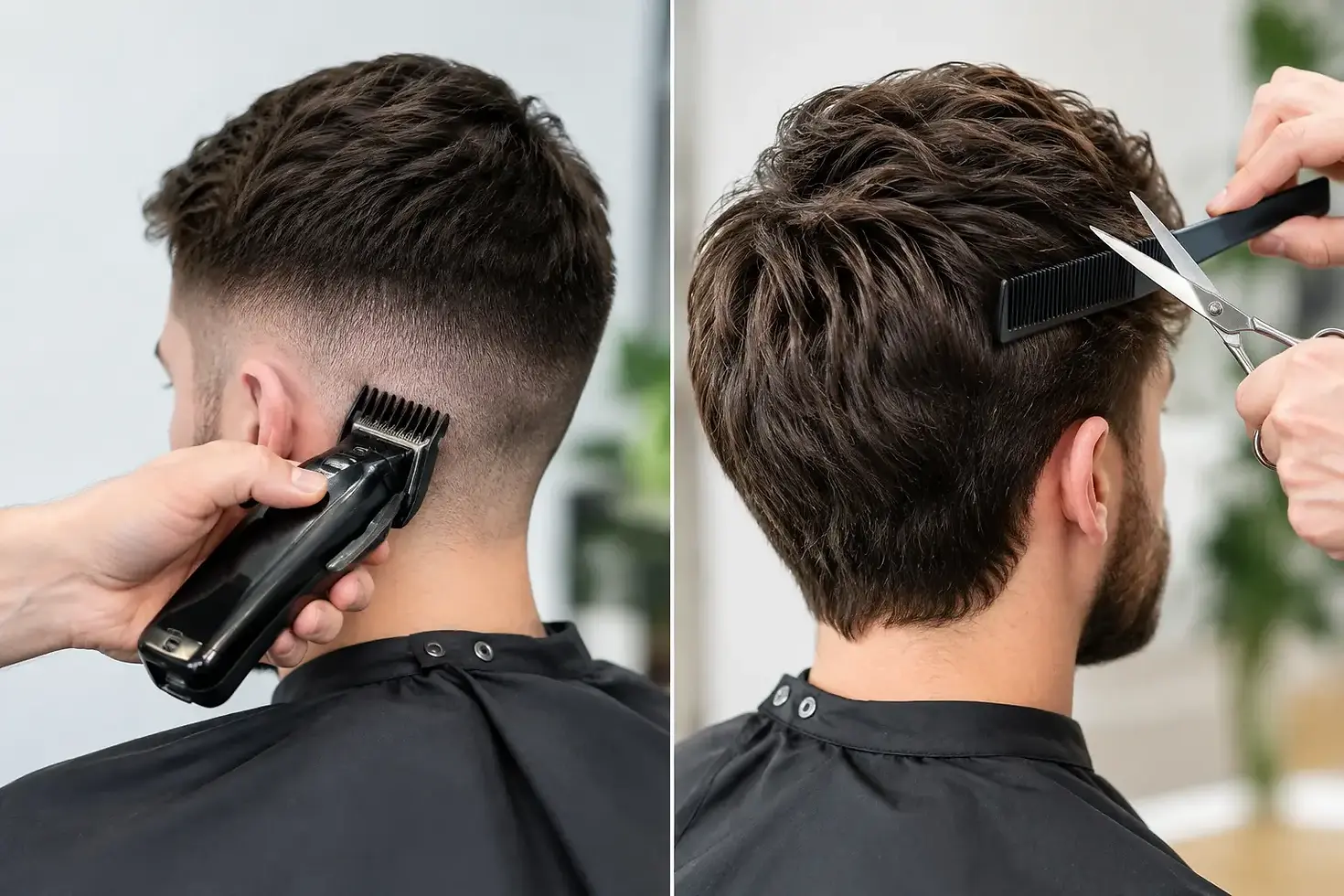
Clipper Cut Versus Scissor Cut - Which Suits You?

A haircut can look completely different before any product goes in. That usually comes down to one decision: clipper cut versus scissor cut. Clippers create clean, close, controlled lines. Scissors leave more length, movement and natural texture. Neither is automatically better. The right choice depends on the finish you want, your hair type and how much styling you want to do between appointments.
For a skin fade with a crisp outline, clippers are central to the result. For a softer shape that can be brushed back, worn loose or styled with texture, scissors often do more of the work. Most current cuts use a combination of both.
Clipper Cut Versus Scissor Cut: The Main Difference
A clipper cut removes hair to a consistent, short length using guarded clippers or a blade. It is the tool behind fades, tapers, buzz cuts, short back and sides, and sharply defined necklines. Because the guard controls length, a barber can work quickly and accurately through close areas.
A scissor cut is built by sectioning the hair and cutting each area by hand. This gives greater control over shape, weight and how the hair falls. It is especially useful through the top, fringe, crown and longer sides, where hair needs to blend naturally rather than sit at one fixed length.
The visual difference is clear. Clippers tend to give a neater, more graphic finish, especially around the sides. Scissors produce a softer edge and more variation within the hair. A good cut is not about choosing one tool for the sake of it. It is about using the right tool in the right place.
When a Clipper Cut Is the Better Choice
Choose clippers when you want your haircut to look tight, fresh and deliberately sharp. They are ideal for a skin fade, low fade, mid fade, high fade, taper, crew cut or a close buzz cut. They also work well for taking bulk out of short sides before blending into a longer top.
Clippers are particularly practical if you like low-effort mornings. Shorter sides dry quickly, need little product and hold their shape well for the first couple of weeks. If your hair is thick or grows outward at the sides, a clipper cut can keep the overall profile cleaner.
The trade-off is maintenance. The shorter the fade, the quicker it loses its freshly cut contrast. A skin fade often looks its sharpest for around one to two weeks, while a longer taper can last longer before it needs attention. If you prefer a consistently precise look, regular appointments are part of the routine.
A close clipper cut can also expose the shape of the head and any uneven growth patterns more clearly. That is not a reason to avoid it, but it is worth discussing with your barber before going very short for the first time.
When a Scissor Cut Makes More Sense
Scissors are the better option when you want length and flexibility. They allow the hair to be shaped around your head rather than cut down to one uniform setting. This matters for medium-length cuts, longer layers, textured crops, curtains, side parts, swept-back styles and softer salon shapes.
A scissor cut can keep hair looking fuller because it retains more length at the root. It can also be tailored more carefully around a strong crown, a receding hairline, curls or areas that grow in different directions. Rather than forcing every section into the same length, the barber or stylist can balance the cut so it sits better day to day.
The upkeep is different rather than necessarily harder. Longer hair may need drying, brushing or a small amount of product to look its best. It also grows out more softly, which suits people who do not want the obvious contrast of a faded side every few weeks.
For salon clients, scissors are often essential for creating shape without removing too much density. Whether the aim is a clean trim, face-framing layers or a restyle, the detail comes from how the hair is elevated, directed and cut - not simply how much is taken off.
The Best Option Is Often Both
Many of the most wearable cuts are neither fully clipper nor fully scissor. A barber may use clippers to fade the nape and sides, scissors over comb to soften the transition, then scissors to shape and texturise the top. This avoids a heavy ledge between the short and long sections.
Think of a classic short back and sides with a textured top. Clippers create the tidy foundation, while scissors stop the top from looking blocky. The same principle applies to a longer taper: the sides may be cleaned up with a higher guard, but the final result stays relaxed because the blend and top are cut by hand.
Texturising should be purposeful. Point cutting can break up blunt ends and help thick hair move, while removing too much weight can leave fine hair looking thin or curly hair looking frizzy. Your hair should be assessed in its natural state before the final approach is chosen.
Choose for Your Hair, Not Just the Photo
A reference photo is useful, but it is only a starting point. The person in the photo may have denser hair, straighter hair, a different hairline or a completely different growth pattern. A skilled barber or stylist will take the look you like and adapt it rather than copying it blindly.
Fine hair often benefits from enough scissor work on top to maintain density. Thick hair may need careful weight removal so it does not puff out at the sides. Curly and coily hair can look excellent with a sharp clipper fade, but the top needs a method that respects the curl pattern and its shrinkage once dry.
If your hairline is beginning to recede, an aggressive high fade can sometimes draw more attention to it. A lower taper, textured fringe or slightly longer top may create a more balanced result. Equally, a clean buzz cut can look intentional and confident when it is properly shaped around the edges.
What to Ask for in the Chair
Clear language makes a better appointment. Start with the outcome: do you want the sides very tight, neat but natural, or long enough to tuck behind the ear? Then explain how you normally wear the top and how much time you are prepared to spend styling it.
For a clipper-led look, mention the type of fade or taper you want and whether you prefer skin, very short or a softer finish. If you know a guard number, say it, but do not worry if you do not. Guard lengths can be discussed in the chair, and a barber can explain what will suit your starting length.
For a scissor-led cut, say whether you want to keep fullness, remove weight, add texture or retain enough length for a parting or fringe. Bring photos from more than one angle if possible. The side and back often matter as much as the front.
It also helps to be honest about your routine. A style that looks great after ten minutes of blow-drying may not be the right fit if you usually have two minutes before work. The best haircut works with your real life, not just the mirror in the shop.
How Often Should You Book?
For a crisp skin fade or tightly clipped sides, booking every two to three weeks keeps the shape looking consistent. A longer taper or short scissor cut may sit well for three to five weeks. Medium and longer scissor styles can often go six to eight weeks, depending on whether you are maintaining a shape or growing the hair out.
If you are changing direction - growing out a fade, moving from long hair to short, or trying a new fringe - expect a transition period. A few planned trims are usually better than one drastic cut followed by months of frustration.
At Fade Fusion, the aim is simple: leave with a cut that suits your hair, your style and the time you actually have to maintain it. Bring the look you have in mind, explain how you wear your hair, and let the finish be tailored from there.


Comments