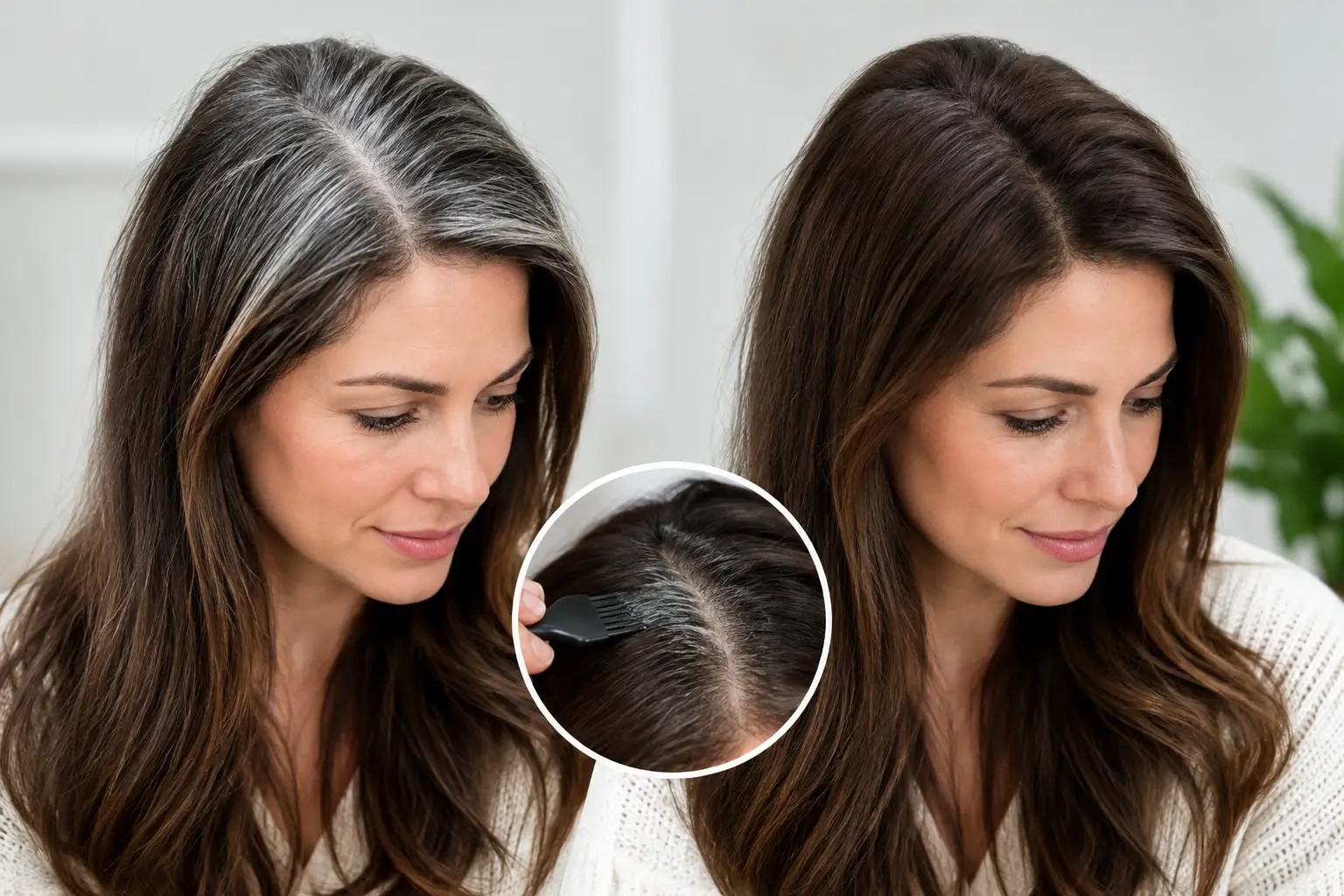
Grey Root Coverage for a Softer Natural Finish

The first few silver strands at the parting can feel far more noticeable than they really are. Grey root coverage is not about chasing a completely uniform block of colour every week. Done well, it refreshes regrowth, protects the condition of your lengths and gives you a finish that still looks like your hair.
The right approach depends on how much grey you have, how quickly it grows through, your existing colour and how much upkeep fits your routine. A quick temporary touch-up can be useful before an event. For regular maintenance, a professional root colour usually gives a cleaner, longer-lasting result.
What grey root coverage is designed to do
Root coverage focuses colour where it is needed most: the new growth at the scalp. This is different from applying permanent colour through the full length every time. Repeatedly colouring previously treated hair can make it look flat, dry or overly dark, particularly through the ends.
A well-planned root service blends new growth with your existing tone. The aim may be full grey coverage, a softer blend that lets some natural silver show through, or a subtle shift that makes the contrast at the parting less obvious. There is no single right finish. A sharp, polished brunette and a dimensional lived-in blonde need very different colour plans.
Grey hair can also behave differently from pigmented hair. It may feel coarser, resist colour in certain areas or appear brighter against darker shades. Hair around the front hairline and temples is often the first place clients notice regrowth, so this area needs particular care during application.
Choosing the right type of coverage
Permanent root colour
Permanent colour is usually the strongest option for clients wanting reliable grey coverage and a consistent shade. It is commonly used on natural regrowth, then carefully matched to the mid-lengths and ends. Depending on growth rate and contrast, many people book a root appointment around every four to six weeks.
The trade-off is commitment. Once a dark permanent shade has been built up over several appointments, changing it lighter can take time and careful colour work. This does not make permanent colour a bad choice. It simply means shade selection matters. A colour that is close to your natural base often grows out more softly than an unnecessarily deep one.
Demi-permanent colour and grey blending
Demi-permanent colour is a lower-commitment option that can tone, enrich and blend greys without always covering every strand solidly. It is particularly useful if you like a softer result, have scattered greys rather than dense regrowth, or want to transition away from a full opaque root colour.
Because it gradually fades, it may need refreshing more often. On the other hand, the grow-out line can be less obvious. For some clients, especially those who are starting to embrace their natural silver, blending gives a more wearable route than trying to erase every grey hair.
Temporary root touch-ups
Root sprays, powders and mascaras can disguise visible regrowth until your next appointment. They are practical for a last-minute meeting, a night out or photos, and they wash away with shampoo. They are not a replacement for salon colour, but they can buy you a few useful days.
Choose a shade slightly lighter rather than markedly darker if you are unsure. A very dark spray against lighter hair can look dense at the hairline. Apply lightly to dry hair, hold the product at a distance and build gradually. Too much can transfer onto fingers, collars or pillowcases.
Matching the colour to your hair, not just the box
The shade written on a colour box is only a starting point. Your natural base, previous salon colour, lightened pieces, warmth in the hair and percentage of grey all affect the finished result. This is why a colour that looks perfect on someone else may appear too warm, too cool or too dark on you.
At a professional consultation, the focus should be on your regrowth and the condition of the rest of your hair. If your ends are lighter from old highlights, placing one flat colour over everything can remove dimension. A root application with a gloss, toner or carefully placed highlights may be a better route to a balanced finish.
Be clear about what you want from your appointment. If your priority is that no grey is visible, say so. If you want the grey softened but not completely hidden, that matters too. Photos can help explain your preferred depth and tone, but your colourist should adapt the result to what is realistic for your hair.
How to make your root colour last longer
Fresh colour starts to lose vibrancy when hair is washed too often, exposed to very hot water or styled repeatedly at high heat. You do not need an elaborate routine, but a few consistent habits can make a noticeable difference.
Use shampoo and conditioner suited to coloured hair, wash with lukewarm rather than hot water, and use heat protection before blow-drying or straightening. If you have a rich brunette, red or copper shade, a colour-depositing treatment between appointments may help maintain depth. Ask for a recommendation based on your exact tone, as the wrong product can create unwanted warmth or leave hair looking dull.
Condition matters as much as colour. Healthy hair reflects light more evenly, making colour look smoother and more expensive. If the lengths feel dry, avoid adding permanent colour through them simply to revive shine. A conditioning treatment, gloss or trim may be the more effective answer.
When roots need more than a standard colour appointment
Some situations need a more tailored plan. If you have used home colour in a very dark shade, have bands from previous applications, or are trying to move from years of coverage towards lighter or greyer hair, be honest before booking. Colour correction is possible, but it is not always a one-appointment job.
The same applies if your scalp is sensitive or you have reacted to colour before. A patch test should be carried out in advance where required, even if you have coloured your hair in the past. Formula changes and sensitivities can develop over time. Never apply colour to a sore, broken or irritated scalp.
For clients in Stirchley and the surrounding Birmingham area, a salon consultation can take the guesswork out of the process. It gives you space to discuss how frequently you want to maintain your roots, whether full coverage is necessary and how to keep the rest of your colour looking fresh.
A natural finish is often the best finish
The most convincing root colour is rarely the darkest or most solid option. It is the one that works with your skin tone, your cut and the way your hair moves. A little variation around the hairline, a softer gloss through the lengths or a carefully matched root shade can make the difference between colour that sits on the hair and colour that looks at home there.
If your greys are starting to show, do not wait until you feel forced into a dramatic change. Book your colour when the regrowth is still manageable, bring up any concerns about coverage or fading, and choose a plan you can genuinely maintain. That is how grey root coverage stays polished without becoming a chore.


Comments