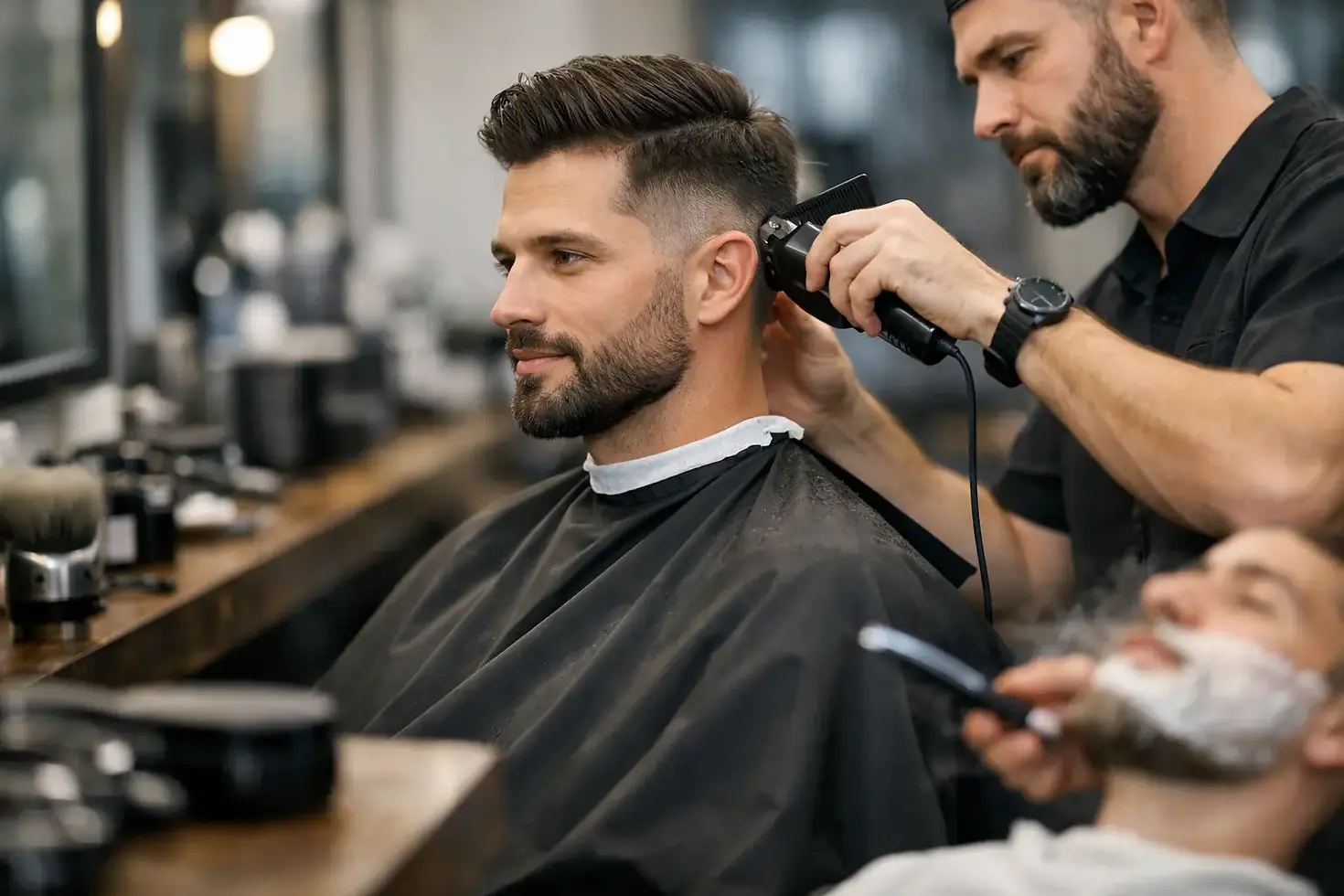
Mens Barber Service Guide for Better Cuts
- Burhaan Vanat
- Jun 30
- 6 min read

You can tell within a minute whether a barber visit will go smoothly. The chair feels right, the consultation is clear, and you are not left trying to explain your haircut with vague phrases like “just tidy it up”. That is where a proper men's barber service guide helps. It gives you a clearer idea of what services mean, what to ask for, and how to get a result that actually suits your hair, face shape and routine.
For some clients, the issue is not the haircut itself. It is the gap between what they picture and what they ask for. A barber can only work with the brief they get, so knowing the basics makes a real difference. Whether you book in every two weeks for a skin fade or only visit when your hair starts losing shape, a better understanding of barber services helps you spend your time and money more wisely.
What a men's barber service guide should actually cover
A useful guide is not about dressing up simple services with fancy wording. It should help you understand what is available, who it suits, and where the trade-offs sit. The right cut is not always the trendiest one. The sharpest finish in the shop might also be the highest maintenance once you are back home on a Monday morning.
At the very least, you should know the difference between a standard haircut, a fade, a beard service and a full grooming appointment. You should also know that the best option depends on your hair type, growth pattern, schedule and how polished you need to look day to day.
Choosing the right barber service for your routine
The most common mistake is choosing a service based only on the final look in a photo. A clean skin fade can look excellent on social media, but if your hair grows fast and you do not want to come back every 10 to 14 days, it may stop looking sharp quite quickly. A low fade or taper often gives a similar neat finish with slightly less upkeep.
If you work in a professional setting, you may want something tidy that still grows out well between visits. In that case, a classic short back and sides, a taper, or a textured crop can be easier to manage than a very tight fade. If you like a more fashion-led look, then a burst fade, mid fade or longer top with texture might suit you better, but you should expect to style it properly.
Beard services are similar. A beard trim is not just about taking length off. A good barber shapes the outline, balances the sides, and makes sure the beard works with the haircut rather than fighting against it. If you wear both hair and beard short, consistency matters. If one is sharp and the other is overgrown, the whole look feels off.
Haircut services explained
A standard haircut usually means a cut without specialist fade work. That might involve scissor work on top and clippers on the back and sides. It suits men who want shape, neatness and flexibility without the higher maintenance of a skin-close finish.
A taper keeps the hair longer overall but gradually shortens it around the neckline and sideburns. It is one of the easiest services to wear because it looks clean without being too severe. For school, work and everyday wear, it is a safe choice.
A fade takes the graduation higher and tighter. Low, mid and high fades each change the look of the head shape. Low fades are more subtle. Mid fades create stronger contrast. High fades are bolder and can sharpen the whole profile, but they do not suit every head shape equally well.
A skin fade goes right down to the skin at the shortest point. It gives the cleanest finish, especially around the ears and neckline, but it also grows out fastest. If you want that fresh-cut look all the time, this is a regular maintenance service, not an occasional one.
Beard trims and grooming services
A beard trim should start with shape, not length. Some men ask for “just a tidy up” when the better question is whether the beard needs more structure on the cheeks, more definition on the neckline, or softer blending into the sideburns. The right answer depends on your beard density and the haircut you are pairing it with.
Short boxed beards usually benefit from precise line work. Longer beards need more weight control so they do not look bulky at the sides. Stubble shaping is another service people underestimate. Even light facial hair can look much better when the neckline is set properly and the cheek line is cleaned up.
If you wear a beard for coverage, be careful with taking too much out of the corners or under the jaw. A sharper beard is not always a shorter one. Sometimes the strongest result comes from better balance rather than more removal.
What to ask your barber before the cut starts
The consultation matters more than most clients think. You do not need barbering jargon, but you do need to be specific. Saying “same again” only works if the last cut was right and your barber remembers the exact details.
Start with the basics. Tell them how short you want the back and sides, whether you want a taper or fade, and how much length you want left on top. Then mention how you style it, how often you are willing to maintain it, and anything that has not worked well before.
It also helps to ask direct questions. Will this grow out neatly? Does this suit my hairline? Will I need product every day? Those answers can save you from a cut that looks great for 24 hours and awkward for the next three weeks.
The role of hair type and face shape
Not every service fits every client in the same way. Thick straight hair can hold structure well, but it can also sit out heavily if the weight is not removed properly. Curly hair often looks excellent with fades and tapers, though shrinkage needs to be accounted for. Fine hair may need texture and shape rather than excessive thinning.
Face shape matters too, but it should not be treated like a rigid rulebook. A stronger fade can sharpen a rounder face, while extra height on top can lengthen the appearance of the head. On the other hand, if the face is already long, too much height and too much tightness at the sides can overdo it. A good barber adjusts the service rather than forcing a trend.
Getting more value from each appointment
A barber visit is not just about leaving with shorter hair. The best appointments give you a result that still works a week later. That means the cut should suit your normal routine, your product use and the rate your hair grows.
If you rarely style your hair, say so. If you wear a helmet for work, mention it. If you train often and wash your hair daily, that affects what products and finish make sense. Practical details matter. A style that needs careful blow-drying every morning may not be good value if you know you will never do it.
For local clients around Stirchley and wider Birmingham, convenience is part of value too. A reliable neighbourhood barber with clear service options often beats chasing a trend-led cut that is hard to maintain or awkward to rebook.
Men's barber service guide for booking the right service
One reason people book the wrong thing is that service menus can look simpler than they are. Haircut, skin fade, beard trim and haircut with beard are not interchangeable. Booking correctly gives enough time for the service and helps the barber plan the appointment properly.
If you want both haircut and beard work, book both. If you want a restyle rather than your usual trim, say that at the start. If your hair is longer than normal and you want a new shape, that is not always a quick standard cut. Clear booking means a better result and less rushing in the chair.
Fade Fusion follows that practical approach well - clear pathways, clear categories, and no fuss over what each side of the business is there to do. For men, that straightforward structure is useful because it removes the guesswork from booking.
How often should you go?
There is no single schedule that suits everyone. Skin fades often need attention every one to two weeks if you want them looking consistently fresh. Tapers and classic cuts can usually stretch to two to four weeks. Medium-length styles may go longer, though shape around the neckline and ears often gives the game away before the top does.
Beards vary even more. Some need weekly clean-up work. Others only need reshaping every couple of weeks. If your beard grows quickly but patchily, more frequent, lighter trims often work better than waiting too long and taking too much off.
A good rhythm is one you can maintain without frustration. The best service on paper is not the best one for you if the upkeep does not fit your time or budget.
The simplest way to get a better barber experience is to treat it like a service, not a gamble. Know what you want, be honest about your routine, and choose a cut that still makes sense once you have left the chair.


Comments