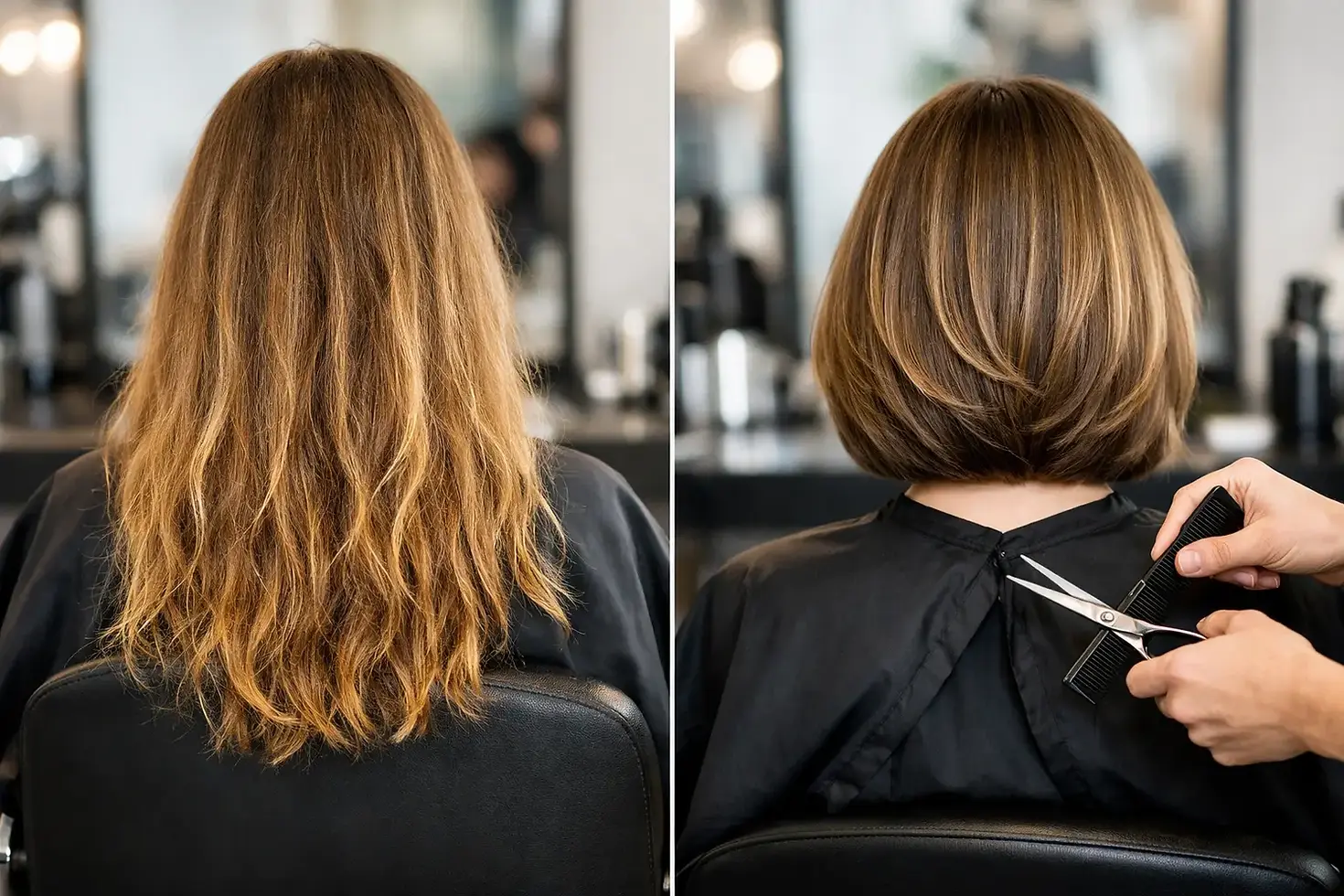
What Is a Restyle Haircut? When a Trim Won’t Do

A tidy-up keeps your existing cut in shape. A restyle changes the shape itself. So, what is a restyle haircut? It is an appointment for a noticeable change to your length, layers, fringe, outline or overall style, with time built in to plan the result properly.
If you have grown out an old cut, want to move from long hair to a cropped style, or are ready to swap a safe routine for something sharper, book a restyle rather than hoping a standard trim will cover it. The difference is not just the amount of hair removed. It is the approach.
What Is a Restyle Haircut?
A restyle haircut is a significant change from your current look. Your barber or stylist assesses the hair you have now, discusses where you want to get to, then cuts and shapes it to create a new direction.
That could mean taking several inches off, adding layers to remove bulk, cutting in a fringe, moving from one-length hair to a graduated bob, or turning grown-out hair into a fresh crop. For men, it may mean changing a longer top into a textured style, moving away from a disconnected cut, or rebuilding an overgrown fade into a balanced shape.
A standard cut usually maintains a style that already works. A restyle starts with a different plan. It needs more consultation, more precision and, in many cases, more time in the chair.
When Should You Book a Restyle Instead of a Regular Cut?
The simple answer is this: book a restyle when you want your hair to look materially different after the appointment.
You may need one if you have not had your hair cut for months and the previous shape has disappeared. Long periods between appointments can leave weight in the wrong places, split or uneven ends, and layers that no longer sit as intended. A quick trim may make the ends neater, but it will not necessarily fix the structure.
A restyle also makes sense when your lifestyle has changed. Perhaps you want a lower-maintenance cut for work, training or busy mornings. Perhaps you have started wearing your natural texture and need a shape that works with it rather than against it. Or you may simply be tired of styling your hair the same way every day.
Be honest when booking. Saying you want “just a little off” but arriving with saved photos of a dramatic new look can leave too little time to do the job properly. A clear booking helps your barber or stylist give the change the attention it deserves.
The Consultation Comes First
The best restyles begin before the scissors come out. A professional consultation should cover your target style, hair type, growth pattern, face shape and normal routine. Your barber or stylist will also look at the condition of your hair, including dryness, previous colour work, damage and uneven sections.
Photos can help, particularly when explaining the finish you like. Bring two or three examples rather than ten completely different looks. It is useful to say what you like about each one: the fringe, the texture, the length around the ears, the softness of the layers, or the way it is styled.
A good professional will not promise an identical result just because you have shown a picture. The model in the image may have different density, curl pattern, hairline or styling time available. The goal is to adapt the idea into a version that suits your own hair and feels realistic to maintain.
This is where trade-offs matter. A very short cut can be quick to style but may need more frequent appointments to stay sharp. Longer layers can give movement but may need more effort with a brush or styling product. A fringe can transform a face shape, yet it needs regular attention if you want it sitting neatly.
What Happens During a Restyle Appointment?
Every service is different, but a restyle usually starts with a detailed consultation followed by a wash or preparation of the hair, depending on the service. The initial cut removes unwanted length and establishes the new outline. Your barber or stylist then works through the shape, balancing the sides, back, crown and front.
For a shorter men’s style, that may involve setting the fade or taper, connecting the top, removing bulk and adding texture so the hair can be styled with purpose. A restyle from medium or long hair may need careful sectioning to avoid taking too much off too quickly.
For salon cuts, the work may focus on creating a new perimeter, layering the interior, building movement, or reshaping the hair around the face. Curly and coily hair needs its own approach, as shrinkage and natural movement affect the finished length.
The final styling is part of the appointment, not an afterthought. It shows how the new cut sits once dry and gives you a chance to see the shape in its finished form. Ask questions while you are there. Find out which product suits your hair, how much to use and the simplest way to recreate the look at home.
How Long Does a Restyle Take?
A restyle normally takes longer than a maintenance cut because the shape is being rebuilt rather than simply refreshed. The exact time depends on your starting length, hair thickness, the complexity of the target cut and whether other services are involved.
A major change, corrective work after a home haircut, or a cut combined with colour and treatment will need additional time. Rushing is rarely useful. Precision around the fringe, neckline, layers and blend is what makes the new style look intentional rather than simply shorter.
If you are booking around work, school runs or a night out, leave some breathing room. A restyle deserves an appointment where you are not watching the clock.
How to Prepare for a Restyle Haircut
Arrive with clean, dry hair unless you have been told otherwise. Heavy product, dry shampoo or a hat-flattened style can make it harder to see your natural growth pattern and texture. If you regularly wear your hair curly, wavy, straightened or tied back, mention that during the consultation. Your everyday finish matters more than how it looks on one good hair day.
It also helps to know your limits. Tell your barber or stylist if you do not use heated tools, dislike product, need to tie your hair up for work, or only have five minutes to get ready in the morning. There is no point choosing a high-effort style if it does not fit your routine.
For a big change, avoid making the decision on impulse just before an important event. A restyle can look brilliant immediately, but it may take a few days to feel familiar and for you to learn how to style it confidently.
Keeping a New Style Looking Right
Your follow-up routine depends on the cut. Short fades, tight tapers and crisp outlines often need maintenance sooner than longer shapes. Fringes may need a quick tidy before the rest of the style is due. Layered and longer cuts can usually go longer between appointments, although regular trims help keep the ends healthy.
Use the product recommended for your finish, but start small. Too much paste, clay, cream or mousse can weigh hair down and hide the shape your appointment created. Build product gradually, especially if you are learning a new styling routine.
If your restyle includes a major change in length or colour, be kind to the hair between visits. Use suitable shampoo and conditioner, avoid excessive heat where possible and do not repeatedly attempt home corrections. A small adjustment is straightforward in the chair. An uneven DIY fix can turn into a bigger repair job.
A restyle should feel like a better fit, not a daily battle. Whether you want a cleaner fade, softer layers, a new fringe or a complete reset, the right cut is the one that looks good and works when you are getting ready for real life. If you are unsure where to start, bring your ideas to Fade Fusion and let the consultation shape the decision.


Comments